DEVELOP
From decision to your own contribution.
Develop helps teams translate a chosen direction into what it means for the team, what is asked of each person and which first step each of them will take.
30 minutes · free · no obligation
Who it's for
Leaders, HR professionals and programme leads who, after an organisational decision, don't only want to explain what is changing, but want the team itself to give meaning to what that change asks of them.
When
Straight after a new course, reorganisation, merger, programme or other decision that affects the team's work.
What you build
A shared picture of what the chosen direction means for this team, with a concrete contribution and first step for each person.
The direction is set. But what does it ask of us?
A decision can be clear without people knowing what it means for their own work. What changes for us as a team? What does this ask of me? What should I do differently, start, or let go of? As long as that translation is missing, the change stays something belonging to the presentation, the programme or the manager. Develop lets the team make that translation itself.
This is your team if:
The change has been announced
the decision is on the table; now the team must determine what it concretely means
Everyone understands the words differently
the same direction leads to different pictures within the team of what needs to happen
The translation is missing
people understand the intention, but don't yet know what they will do differently tomorrow
It stays with the manager
you keep explaining and pulling while the contribution has to come from the team itself
A new phase begins
a course, reorganisation or programme calls for new choices in the daily work
Without that translation, existing work easily beats the new direction. Not necessarily because people don't want to change, but because it isn't yet clear what they themselves should hold on to, change or take up.
Develop makes that concrete before the change fades into background noise.
This is what you notice first:
- “In the meeting everyone nods, and on Monday everything is as it was.”
- “You tell the story for the fifth time, and it doesn't land.”
- “The announcement went up on the wall, and nobody looked at it.”
- “The change lives in your diary, not in the team's.”


The method
Look first. Then compare. Then contribute.
The direction itself doesn't have to be chosen again here. The question is what that direction means for this team and for each person individually.
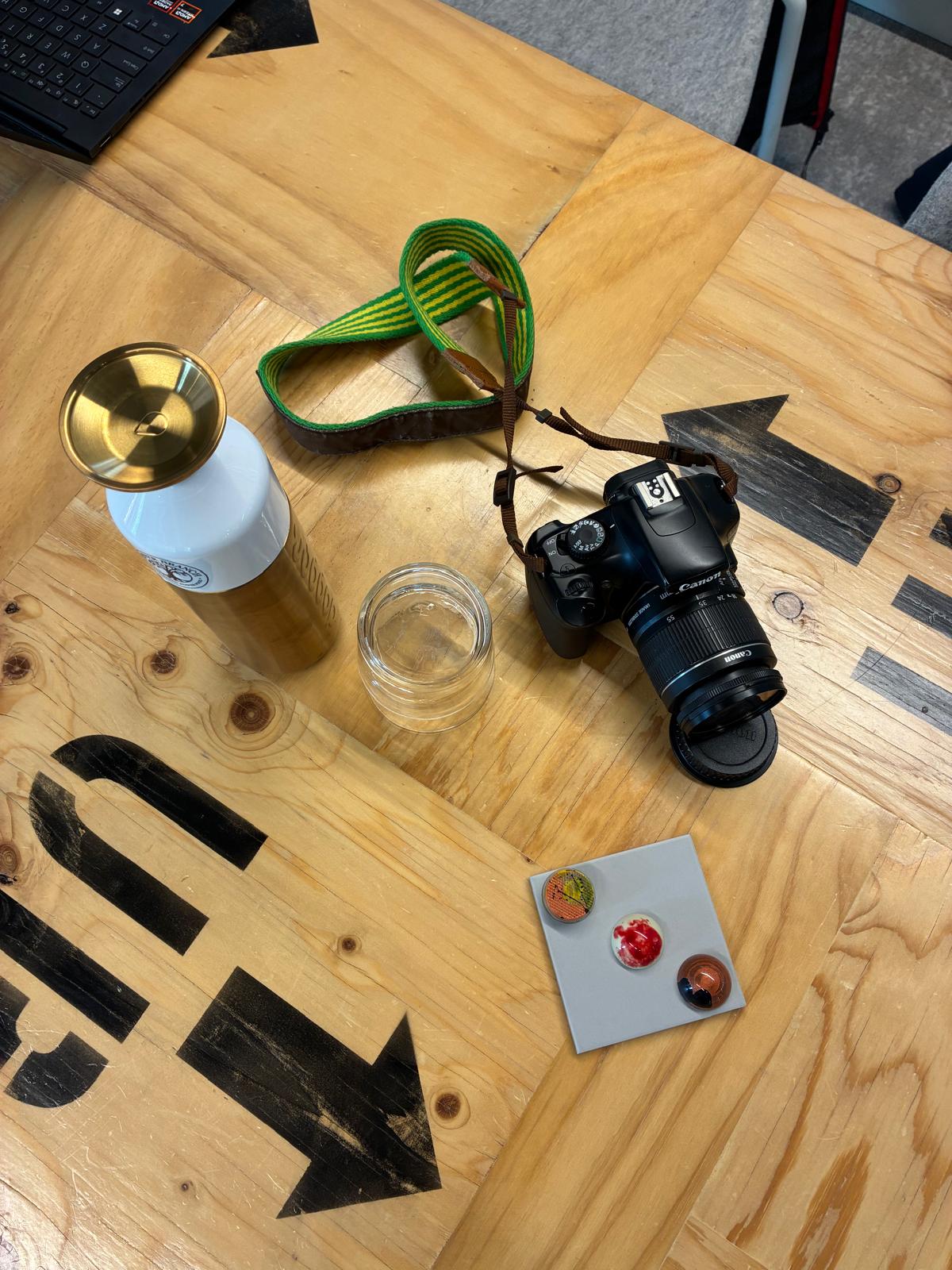
You work at an inspiring location, inside and/or outside, with a camera and on paper. Images show what the change means to each person more sharply than words can. The photographs are on the table during the same session.
1
Capture
Everyone makes images of what the change means to them.
2
Compare
The images go side by side. Different interpretations of the same direction become visible and discussable.
3
Make sense
What does this direction ask of us as a team?
4
Choose
What does that mean for my contribution?
5
Commit
Which first step do I take, and when?
People commit to what they've built themselves. That's why they build it here themselves.
The method was developed and tested inside a large international organisation. I've run more than eighty sessions with it, for fifteen hundred people.
WHAT YOU TAKE WITH YOU
The main result is the translation of an organisational decision to the team: a shared picture of what the direction means, and for each person a concrete contribution and first step.
Tangible
A shared picture of what the change means for this team
Printed, to put on the table when the conversation turns to the decision again.
Each person's contribution
Concrete and tied to a date, so something actually changes on Monday.
What the team also takes with it
A way to translate future changes more quickly from general direction into concrete meaning, contribution and action.
Includes an opening conversation with the manager, lunch, prints and materials. After six weeks, we look back at what has actually changed.
No engagement survey that disappears into a drawer. A shared picture, each person's contribution and skills that stay.
When do you use this
The team leaves the room with a shared picture and each person's own contribution. Sometimes you put those images on the table. More often someone just needs them to know what to say.
When someone has to explain what they do.
To a colleague, another department or their own team. They don't retell the decision from above, but their own part in it.
When something lands on the desk that doesn't belong.
Work comes along. The shared picture shows whether it fits the direction or not.
When it fades after a few months.
The energy drains and the old work takes over. The set is still there, and the follow-up is short.
The shared picture doesn't just say what changes. It shows who picks up what, and that's what makes the difference in the weeks after.
One day, from decision to contribution.
Not a debate about the decision, but work on what the team does with it.
With a team session, the conversation is central. With Develop team you work through a fixed visual method towards a tangible result: a shared picture of the change, a contribution with a date per person, and a story each of them can tell themselves.
One day · from decision to contribution
Develop team: one day
Choose this if the change has been decided and you want the team to make something of it themselves, instead of you explaining it over and over.
Duration
one day
Format
team · up to 12 participants
Included
an opening conversation with the manager · lunch · prints · materials · a follow-up six weeks on
You take home
a shared picture of the change (printed) · each person's contribution, concrete and with a date
| Develop team | Company or employer – excluding VAT |
|---|---|
| One-day team option, up to 12 participants | from €2,500 |
The price is per day, for the whole team up to twelve participants. Longer tracks by agreement.

Who you'd be doing this with
Twenty-five years in international organisations, and twenty years of improvised theatre. That combination runs through everything Develop does. I've worked in small units and large ones, across different countries and cultures and a range of business models, at all three levels: setting strategy, turning it into plans, and getting those plans done with a team. I've managed people and reorganised departments. I set up a leadership programme and built innovation work from scratch. I know how a decision taken in the boardroom lands on the floor six months later. Improvisation taught me to hear the structure in a story, to listen properly, and to give back what the other person brings. You can't script a conversation, but you can prepare for one. When it matters, all you've got is what you've actually thought through, and you need to trust that it'll come out.
Let's see whether it fits.
Bring the decision that's on the table. Thirty minutes is enough to work out whether Develop team adds anything.
30 minutes · nothing to prepare·harm.hendriks@doorsicht.nl