Who it's for
Leaders and management teams who set direction and priorities for an organisation, business unit or department.
 focus.NL
FOCUS · LEADERSHIP TEAM · ONE DAY
One day with your management team. Together you make visible, in images, where you stand and where you want to go. Then you choose. You leave with a chosen direction everyone can explain, not with a report.
1 day locatie in overleg From €2,500 excl. VAT
Who it's for
Leaders and management teams who set direction and priorities for an organisation, business unit or department.
When
The strategy needs renewing. Or several directions are defensible and you need to choose what takes priority.
Result
A chosen direction in images. With priorities, explicit non-choices and a story that holds up outside the room.
After the meeting you ask three people what was decided. You get three answers.
Everyone nods. Two weeks later nobody can say why.
The report from the last away day sits in a folder somewhere.
Outside the room, the choice turns out not to exist.
By the end of the day there is a choice all twelve of you can retell.
Strategy is an answer to three questions. Where do we stand, where do we want to go, and what is the next step. The answers are usually spread across the team. Without a shared, explicit choice, everyone fills in the direction for themselves. Months later you discover you have been working on different versions of the same plan. If you don't choose, the environment chooses for you: the next project, the loudest voice or the urgency of the day.
80%
Decisions made together with the people involved succeed more than 80% of the time. Imposed decisions succeed one time in three.
Choosing together isn't the soft route. It's the surest.
Source: Paul Nutt, Ohio State University, research into more than 400 decisions in business, government and non-profit
From strategy sessions using the same visual approach, inside an international organisation.
“An image doesn't just illustrate an idea. It sparks the conversation that gets you to the real one.”
“You could see the shift. And I felt it too.”
“People get the most out of a process they enjoy being part of.”

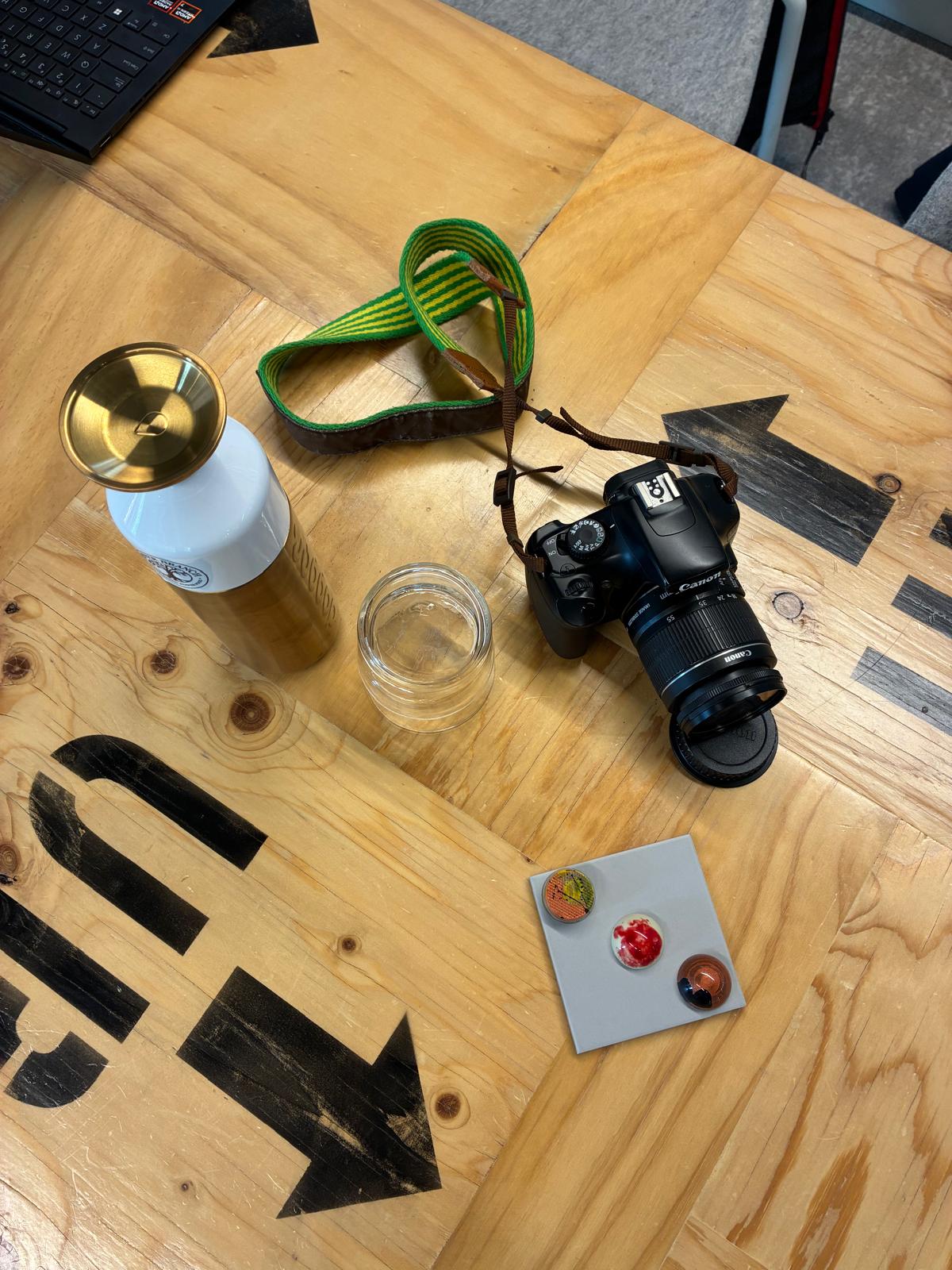
Not a day spent only at the table. The team moves around in changing groups, looks and comes back with images. The photos are printed and on the table the same day. In five steps you go from looking to choosing to doing.
01
Everyone captures what works, what chafes and where things need to go.
02
The images go side by side. Differences become visible and give the conversation direction.
03
What does it mean that you see it differently?
04
What do you choose, and what don't you choose?
05
Who does what, with a date.
The differences are on the table before the choice is made. That is why the choice holds.
You work on one question. The question on the table right now.
You work in changing pairs and small groups. That way you see how a colleague sees the same situation differently.
Differences become visible in images, not in positions. That makes the conversation lighter and more honest.
Whoever helps choose can explain it later. To their own team, and to whoever wasn't there.
One question. Twelve viewpoints. One choice.
TANGIBLE RESULT
Not a report that disappears into a folder. Something you can act on on Monday.
The direction doesn't only say what you will do. It shows what you won't do. That brings calm to the weeks that follow.

During Focus I guide the team's conversation. I bring structure, ask questions, make connections and reflect back what I see in the images and in how you talk about them.
Sometimes I help you slow down and look more closely. Sometimes I help you push on, because the conversation keeps circling. I keep watch over the process: where are you now, which question are you actually trying to answer, and where are you talking past each other?
I don't hand you the strategy. The choice stays with the team. My role is to make sure a choice has been made by the end of the day, and that everyone can explain it.
I have used this method in more than eighty sessions, with fifteen hundred participants in total. Twenty-five years in international organisations and twenty years of improvisational theatre shape how I do it.
I developed strategy, translated it into plans and then owned the delivery too. As a people manager and director I have led teams and reorganisations. I know how a boardroom decision plays out on the floor six months later.
Improvisation taught me something different: listening closely, building on what someone brings and seeing structure in a story that isn't finished yet.
Those two worlds meet in Focus. I look along with you, ask further and help you get sharp, together, on what the next step is.
About the approach, the facilitator's role and what you have in hand afterwards.
Bring the question that is on the table. It doesn't have to be sharp yet. Thirty minutes is enough to see whether Focus adds something.
30 minutes · no preparation needed · harm.hendriks@doorsicht.nl